
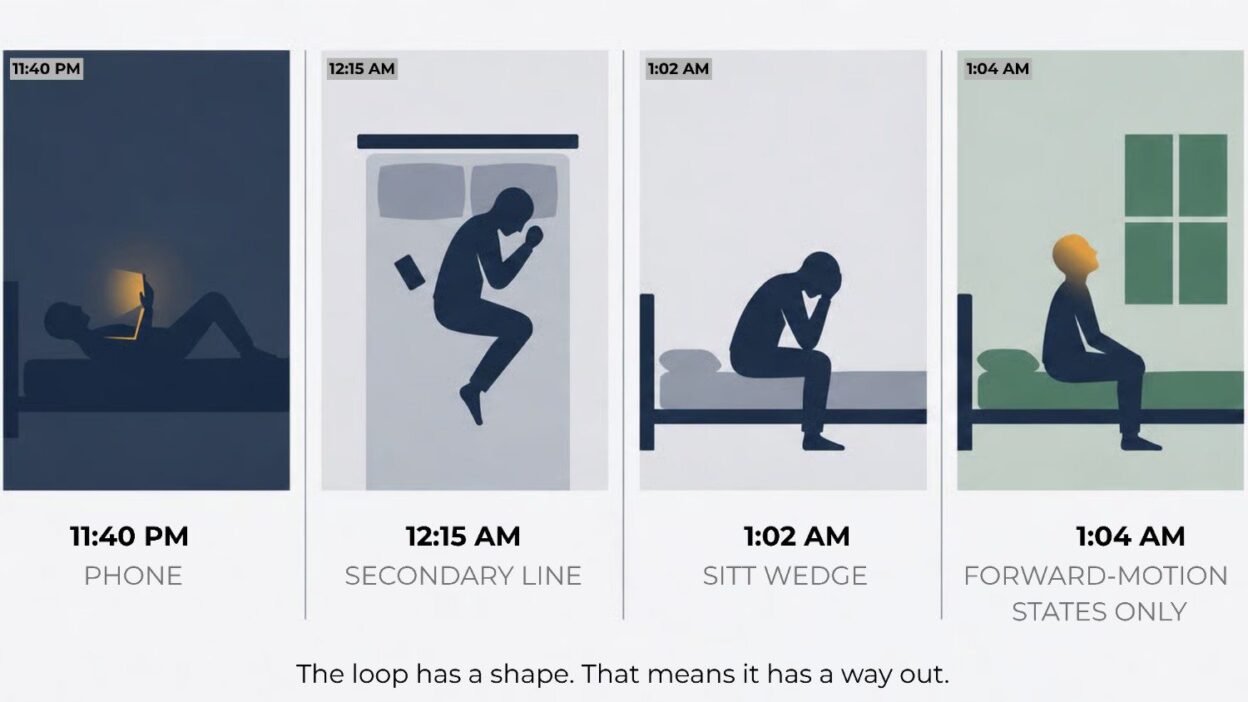
If you’re reading this at 1am, phone in hand, having just told yourself “this is the last time” for what feels like the hundredth time. Just know something before you go any further.
You are not broken. You are not weak. And you are not alone in this.
What you’re experiencing has a name, a mechanism, and most importantly, a way out. It’s not a character flaw. It’s a pattern your brain learned, and learned patterns can be unlearned. Let’s talk about why this feels so impossible to stop, and what’s actually happening underneath the shame.
You’re Not Broken, Here’s What’s Actually Happening
Here’s the thing almost nobody tells you when you’re stuck in this cycle: the reason you can’t stop watching porn isn’t a lack of willpower. It’s that your brain and your emotions have become tangled together in a loop that runs faster than conscious decision-making does.
Think about how many times you’ve made the promise. “Not tonight.” “This is the last one.” “I’ll delete the apps.” And then, a few hours or a few days later, you’re right back where you started, probably feeling more ashamed than the time before.
That pattern isn’t proof that something is wrong with you. It’s proof that a habit loop has been reinforced so many times that it now runs on autopilot. Understanding how that loop works is the first real step toward interrupting it.
The Habit Loop: Trigger → Craving → Relief → Shame
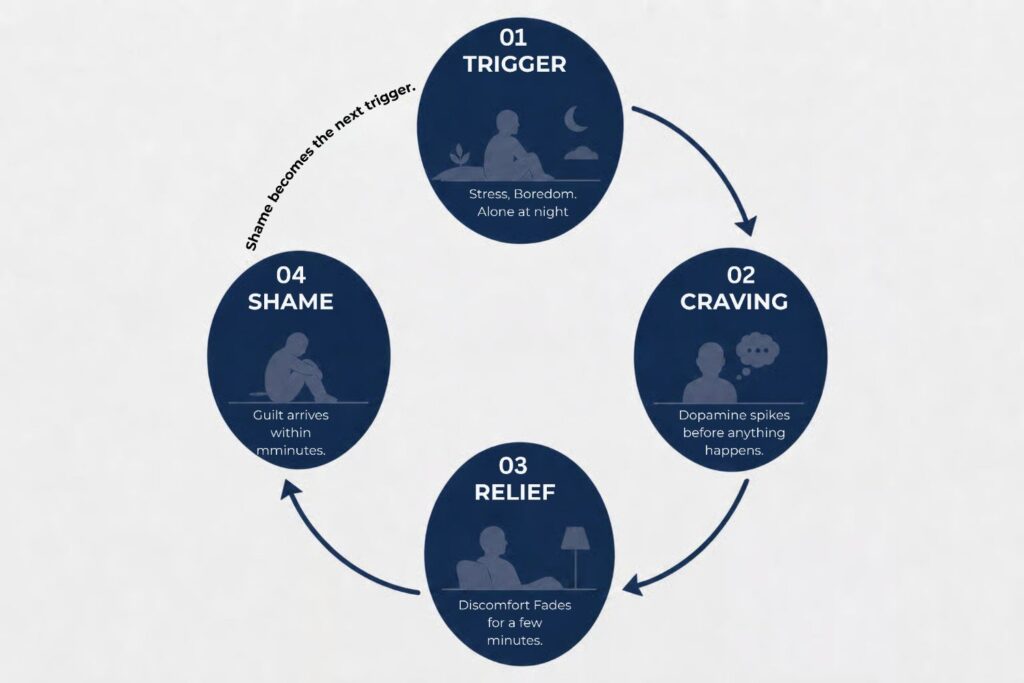
Every habit, good or bad runs on the same basic structure: a trigger, a craving, a response, and a reward. Watching porn is no different, except this particular loop has become unusually effective at hijacking that structure.
Here’s how it plays out for most people:
- Trigger. Something sets the loop in motion, often something you barely notice. Stress after a hard day. Boredom. Loneliness. Simply being alone in your room at a certain time of night. The trigger doesn’t have to be dramatic. Most of the time, it isn’t.
- Craving. The trigger creates an urge, a pull toward relief. This is where dopamine, your brain’s motivation chemical, starts to spike, even before anything has happened yet. Your brain is anticipating the reward, not just responding to it.
- Relief. You watch. Your brain gets the dopamine hit it was anticipating, and for a few minutes, the discomfort that started the whole cycle fades.
- Shame. And then often within minutes, the guilt sets in. And here’s the part that keeps people stuck: that shame itself becomes a new trigger. Painful emotions can drive the brain to seek relief again, which restarts the exact same loop that caused the shame in the first place.
This is why willpower alone so rarely works. By the time you’re consciously “deciding,” the trigger has already fired and the craving is already underway. You’re not fighting a simple bad habit, you’re fighting a trained neural pathway that activates faster than your rational mind can intervene.
Why “Just Stop” Doesn’t Work
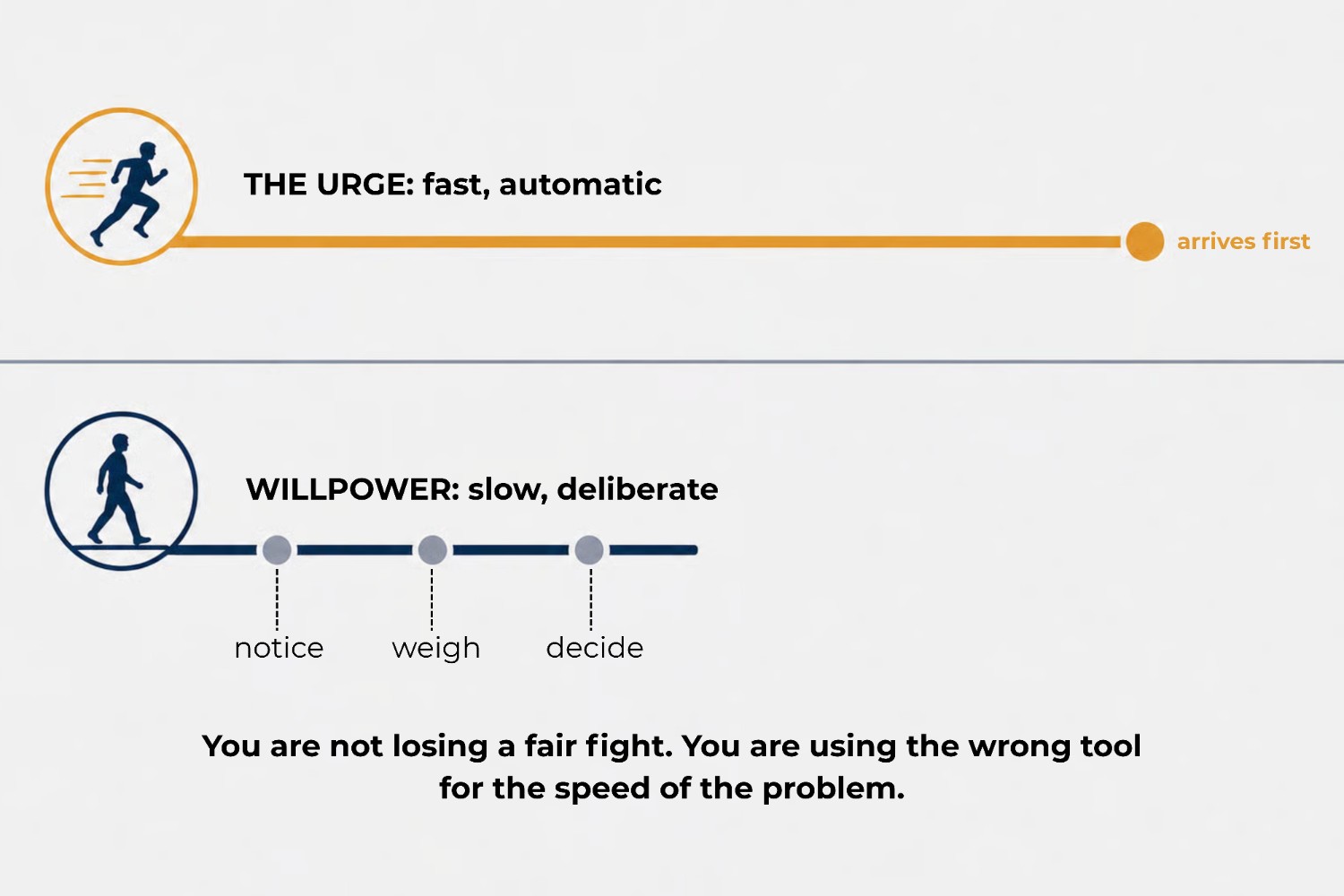
If you’ve ever felt frustrated that “just stopping” hasn’t worked, it’s not because you haven’t tried hard enough. It’s because that advice misunderstands the problem.
Willpower lives in the slow, deliberate part of your brain, the prefrontal cortex, responsible for weighing consequences and making thoughtful choices. The urge, on the other hand, lives in a faster, older part of the brain that reacts before your conscious mind even catches up.
Trying to out-willpower an urge is a bit like trying to out-sprint a car. It’s not a fair fight, and losing it repeatedly doesn’t mean you’re weak, it means you’ve been using the wrong tool for the speed of the problem.
Is This Addiction, or Something Else?
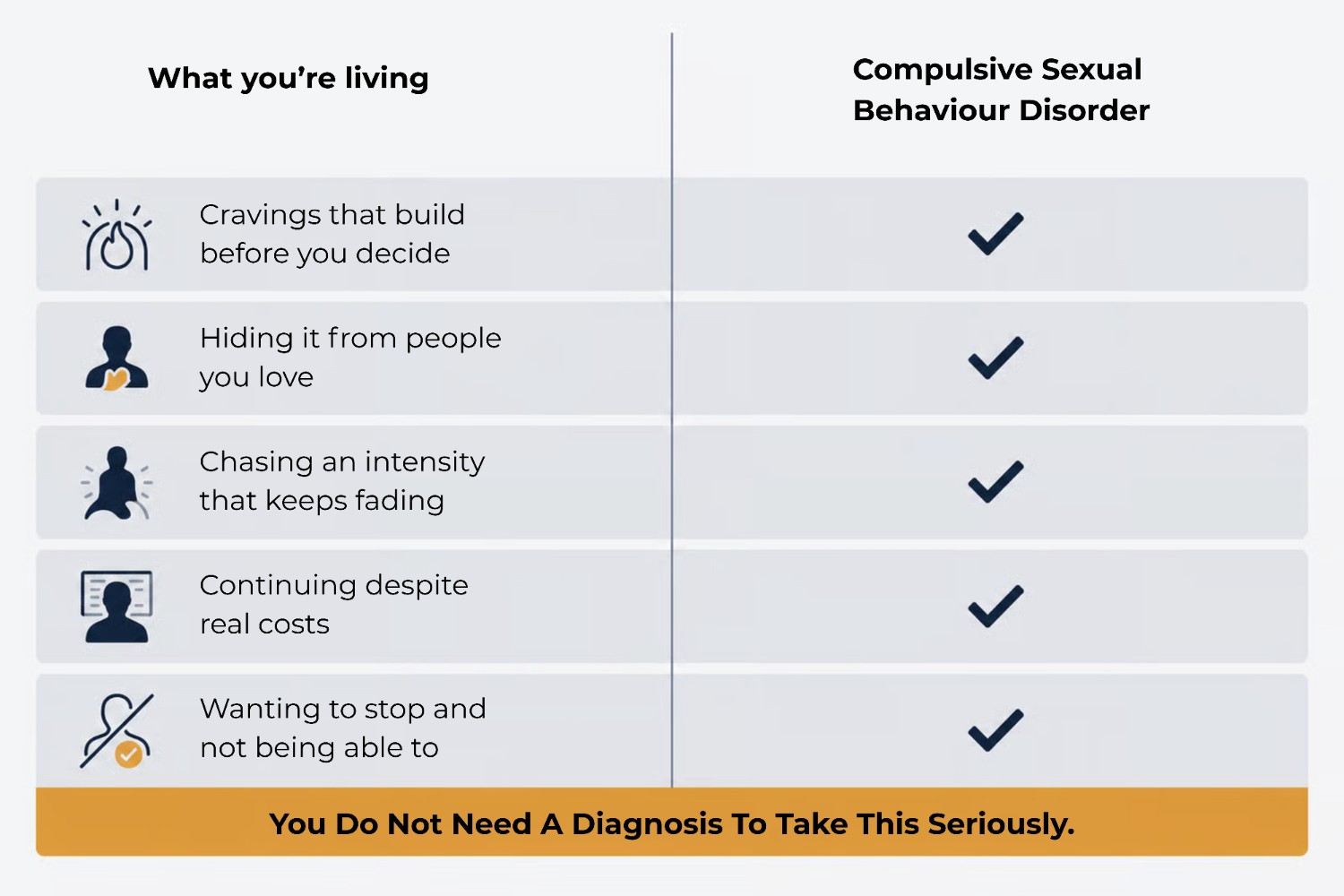
You might be wondering whether what you’re experiencing counts as an “addiction.” The honest answer is: it depends who you ask, and the label matters less than you’d think.
Some clinicians recognize a pattern called Compulsive Sexual Behavior Disorder, repetitive sexual behavior, porn use being among the most common, that feels hard to control and continues despite real consequences. Whether or not a formal label applies to your specific situation, the lived experience is often strikingly similar to other addictive patterns: cravings, urges to hide the behavior from others, chasing an intensity that seems to fade over time, and a felt sense of being unable to stop despite genuinely wanting to.
You don’t need a diagnosis to take this seriously. If it feels repetitive, hard to control, and it’s costing you something, your time, your self-respect, your relationships, that’s reason enough to want change, regardless of what anyone calls it.
What Actually Breaks the Cycle
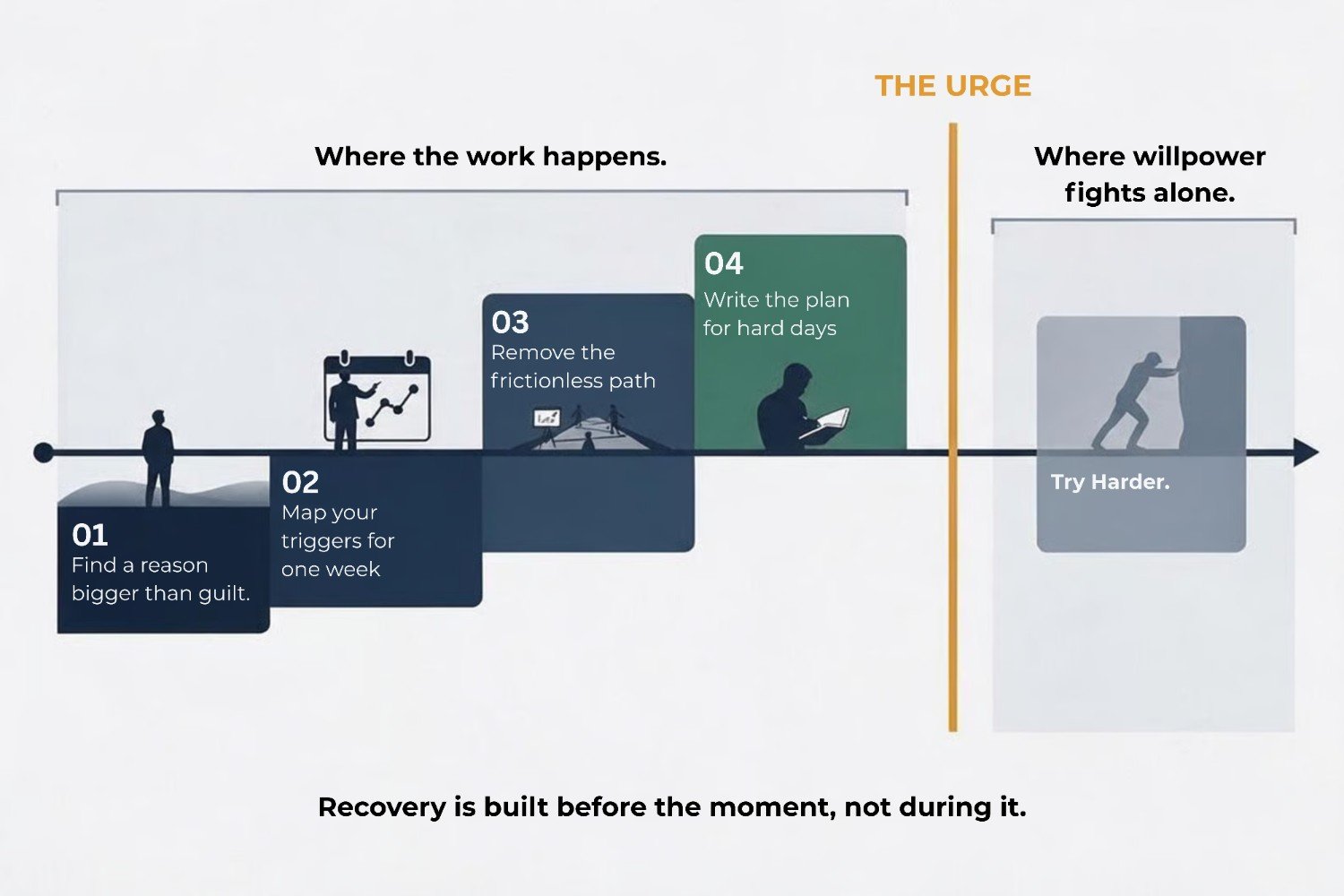
Here’s the good news buried in all of this: because this is a learned pattern, it can be unlearned. The same repetition that built the loop can be used, deliberately and differently, to build a new one.
That doesn’t happen by trying harder the moment the urge hits, as we’ve covered, that’s fighting the wrong part of the fight. It happens by building a system before the urge arrives: understanding your specific triggers, removing the friction-free path to relief, and having a plan ready before you need it.
That’s exactly what the complete framework in our full guide on how to stop watching pornography walks you through, four concrete parts, in order, starting with finding a reason bigger than guilt and ending with a real plan for what to do after a hard day, because recovery is never a straight line.
If you want to understand the brain science behind this even further , including why the effects can feel so strong and how the brain recovers How Porn Affects the Brain goes deeper into neuroscience.
Frequently Asked Questions
Is it normal to feel like I can’t stop watching porn, even when I want to?
Yes, this is an extremely common experience, and it doesn’t mean you’re uniquely weak-willed. It reflects a well-documented habit loop involving dopamine, trigger response, and learned behavior, not a personal failing.
Is this the same as porn addiction?
It can be, though not everyone who struggles to stop meets a clinical definition of addiction. What matters more than the label is whether the pattern feels repetitive, hard to control, and is causing real consequences in your life, that’s reason enough to want change.
Why does the urge feel so much stronger late at night?
Late-night hours often combine several triggers at once, isolation, tiredness, fewer distractions, and lowered self-regulation from fatigue. That combination makes the trigger-craving cycle fire more easily than it would earlier in the day.
What’s the first real step if I want to stop?
Start by noticing your triggers without judgment for about a week, what precedes the urge, not just the urge itself. You can’t interrupt a pattern you haven’t identified. Our complete guide walks through this as Part 2 of a full four-part framework.
Does feeling shame after watching porn make it harder to stop?
Often, yes. Shame can act as its own trigger, creating a second loop where painful feelings drive the brain to seek relief again, which restarts the exact cycle that caused the shame. Responding to setbacks without spiraling into all-or-nothing thinking is a key part of breaking free long-term.
You Don’t Have to Figure This Out Alone
Understanding why this happens is a real first step, but understanding alone doesn’t build the system that breaks the cycle. If you’re ready to move from “why does this happen” to “here’s exactly what I’m going to do about it,” Peace Over Pixels’ 4-Week Recovery Reset walks you through it week by week, with real support along the way. It’s free, and it’s where every client begins.