
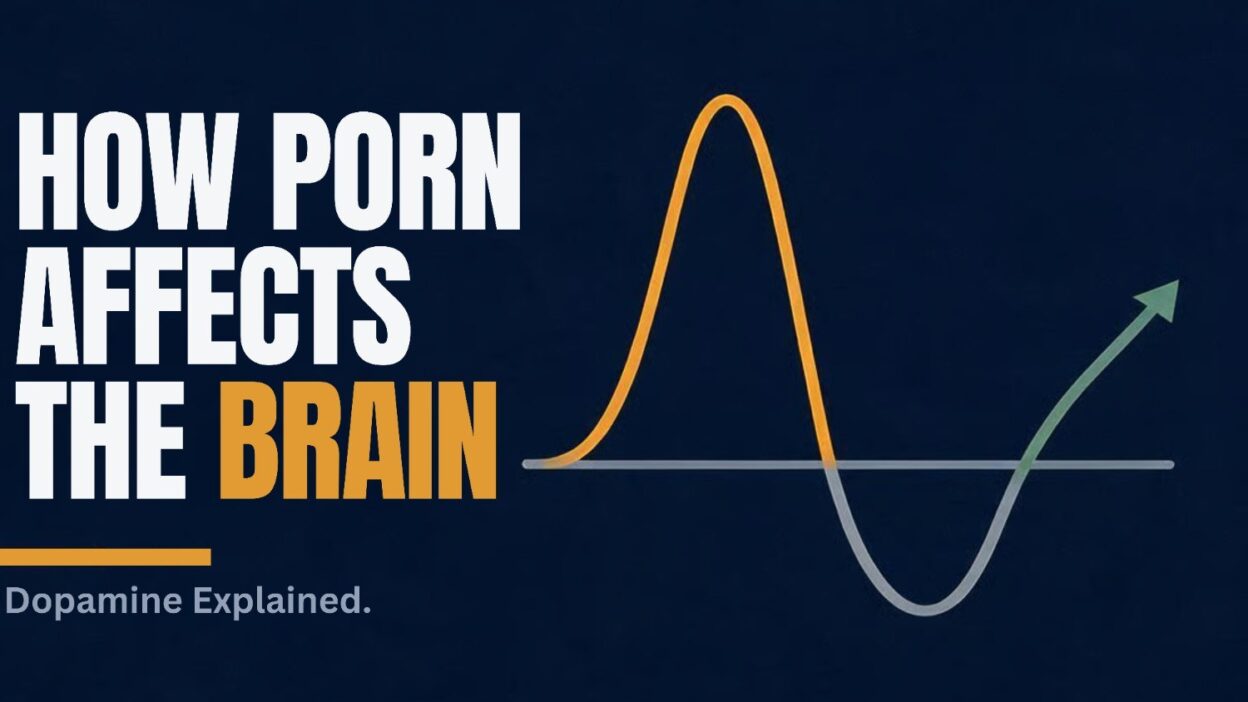
If you’ve ever wondered why quitting porn feels so much harder than quitting other habits, the answer isn’t about discipline. It’s about brain chemistry, specifically, a chemical called dopamine, and how porn interacts with it differently than almost anything else your brain encounters.
This isn’t meant to scare you. Understanding the actual mechanism is one of the most useful things you can do for your own recovery, because it replaces shame with clarity. Here’s what’s really happening.
Meet Dopamine, Your Brain’s Motivation Chemical
Why does quitting porn feel harder than other habits? It comes down to dopamine, novelty, and how the brain’s reward system gets rewired.
Dopamine gets called the “pleasure chemical” so often that most people misunderstand what it actually does. It’s more accurate to think of it as your brain’s motivation and learning chemical.
When you encounter something rewarding, food, a compliment, a new purchase, a notification, your brain releases dopamine. That release doesn’t just make you feel good at the moment. It signals to your brain: this matters, pay attention, remember how to get this again. Dopamine is what drives you to seek out and repeat behaviors, far more than it’s what makes you enjoy them once you have them.
That distinction matters, because it explains why craving something and actually liking it can drift apart over time, which is exactly what happens with repeated porn use.
Why Porn Creates an Unusually Strong Dopamine Response
Your brain’s reward system evolved to respond powerfully to novelty. In evolutionary terms, new information and new stimuli were often genuinely important to notice , a new food source, a new threat, a new mate. Each time something is new, your brain treats it as worth a fresh dopamine signal.
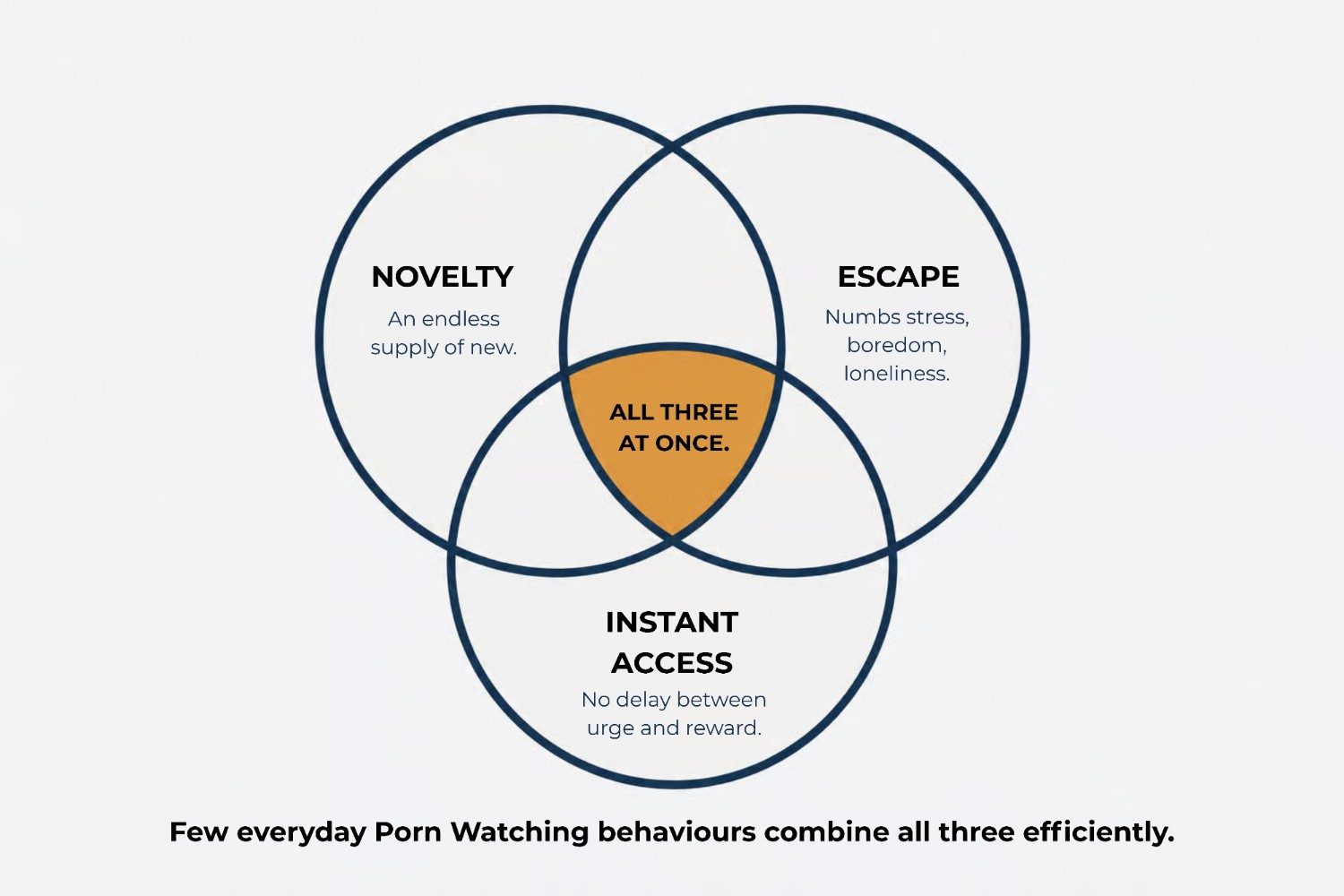
Porn is unusually effective at exploiting this mechanism because it combines three things at once:
- Novelty , an essentially endless supply of new images, videos, and scenarios, each one triggering a fresh dopamine response
- Escape , an accessible way to numb stress, boredom, or loneliness in the moment
- Instant access , no delay between the urge and the reward, which strengthens the trigger-craving-relief loop every time it runs
Few other everyday behaviors combine all three this efficiently. That’s not a moral failing on your part, it’s simply how effective the mechanism is, by design.
What Happens With Repeated Use
Here’s where the science gets genuinely important to understand, because it explains why this often escalates over time even when someone doesn’t want it to.
Desensitization
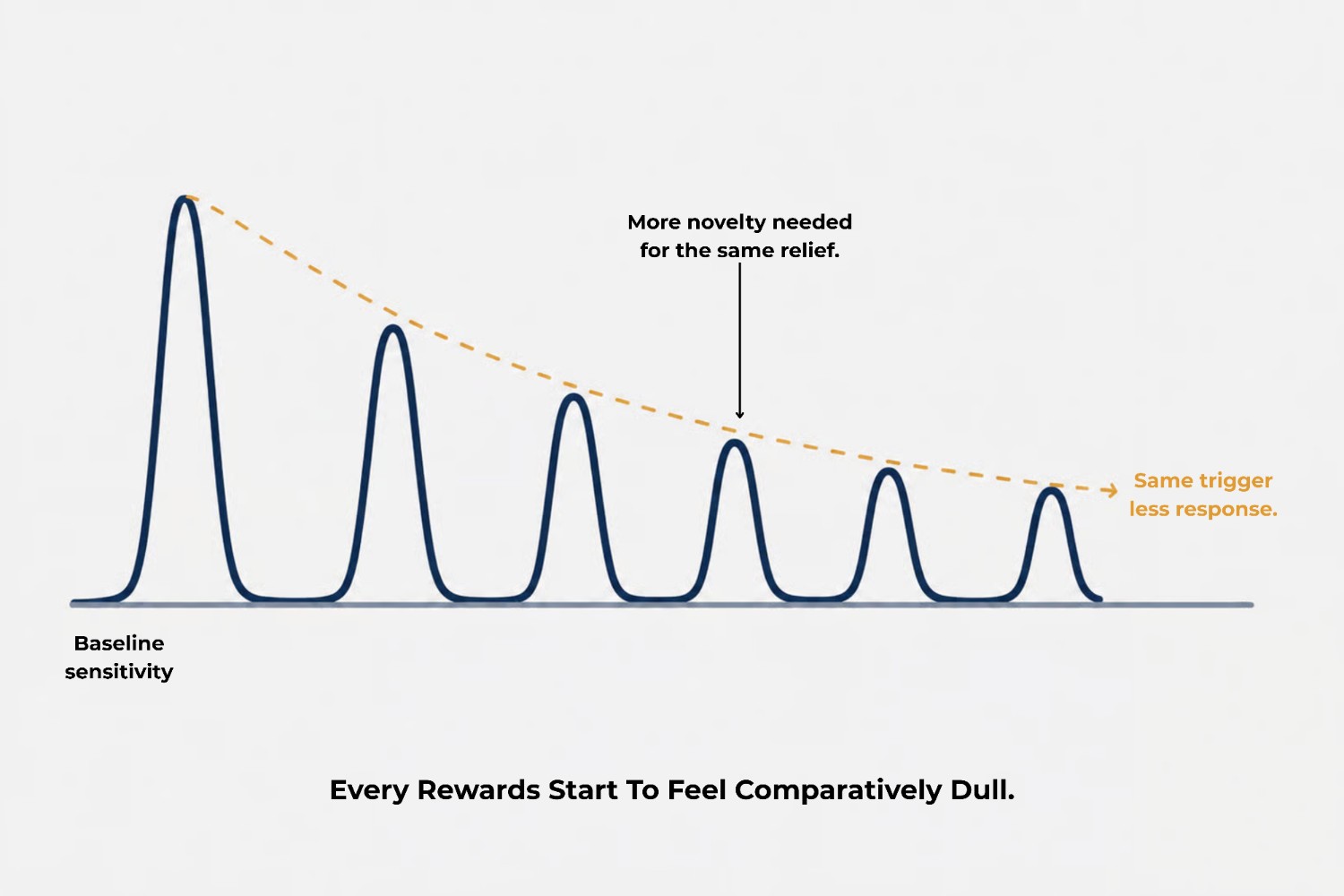
With repeated high-intensity dopamine spikes, research suggests the brain’s reward system can become less sensitive to those same signals over time. This is sometimes called desensitization. In practice, it often means needing more novelty, more frequency, or more intense material to get the same sense of relief, while everyday sources of pleasure and satisfaction start to feel comparatively dull.
The Gap Between Wanting and Liking
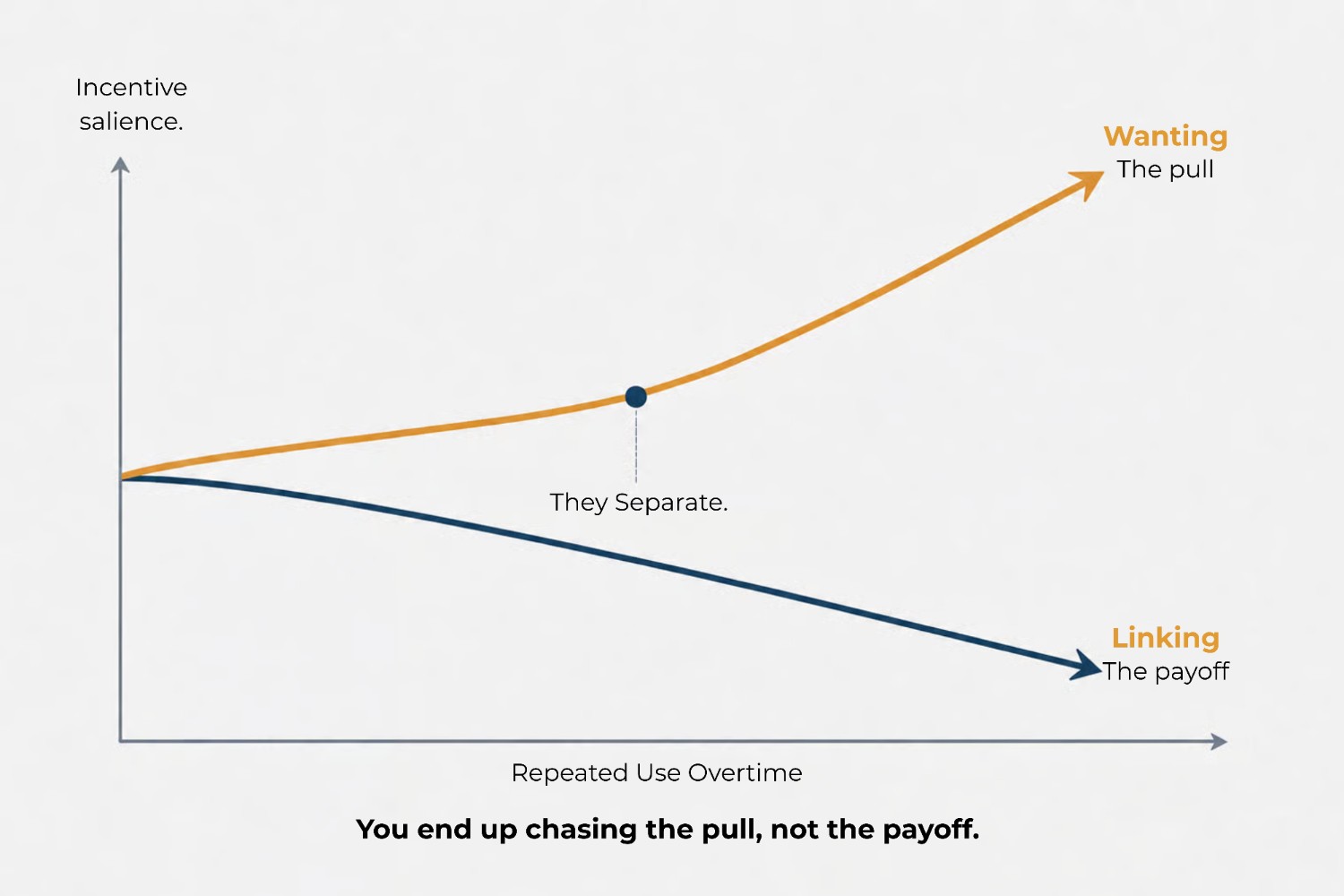
Researchers describe a phenomenon called incentive salience, essentially, the brain assigning outsized importance to certain cues over time, independent of how much pleasure those cues actually deliver anymore. In plain terms: the pull toward the behavior can intensify even as the actual satisfaction from it diminishes. This is part of why the behavior can start to feel compulsive rather than genuinely enjoyable, you’re chasing the pull, not the payoff.
Prefrontal Cortex Involvement
Your prefrontal cortex is the part of your brain responsible for impulse control, weighing consequences, and making deliberate decisions. Some research has found associations between frequent, compulsive pornography use and reduced connectivity between the reward system and the prefrontal cortex, which may help explain why, in the moment of an urge, the rational part of your brain can feel like it’s “offline” or arriving too late to intervene.
It’s worth being precise here: most of this research is correlational, based on self-reported use and brain-imaging studies, rather than definitive proof that porn alone causes these changes in every person. The pattern is well-documented and consistent with what’s seen in other behavioral addictions but individual experiences vary, and not everyone who watches porn will experience these effects to the same degree.
Can the Brain Recover?
This is the part most people searching this topic actually want to know, and the honest answer is genuinely encouraging: yes, evidence points to real recovery being possible.
The brain is neuroplastic, meaning it can rewire itself in response to changed behavior, in both directions. The same repetition that reinforced the porn-related reward pathway can, with sustained change, allow the brain to recalibrate.
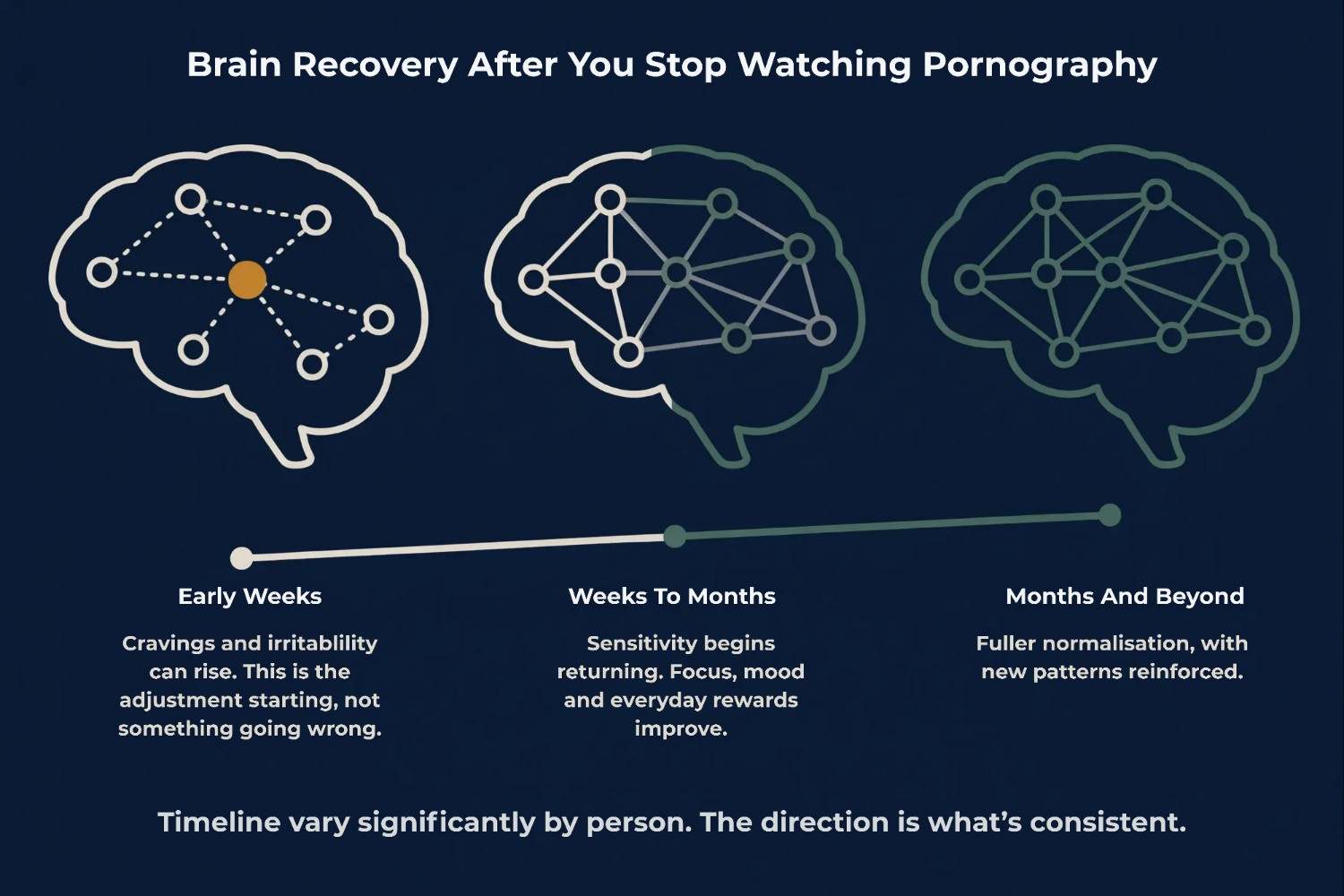
Research and clinical reporting generally describe a rough pattern, though individual timelines vary significantly based on usage history and intensity:
- Early weeks: Often the hardest, cravings and irritability can temporarily increase as the brain adjusts to the absence of a familiar stimulation source. This isn’t a sign that something is going wrong; it’s a sign the adjustment has started.
- Several weeks to a few months: Many people begin noticing measurable improvements in dopamine sensitivity, along with better focus, mood, and responsiveness to everyday rewards.
- Longer-term (several months and beyond): Fuller normalization of reward-system sensitivity, with continued reinforcement of new patterns.
The research on exact timelines isn’t fully settled, some studies point to meaningful receptor changes within weeks, others suggest fuller recovery can take months to over a year depending on the person. What’s consistent across the research is the direction: sustained change leads to measurable recovery, not permanent damage.
What This Means for You
None of this is about scaring you into stopping through fear of “brain damage,” the research doesn’t support that framing, and shame tends to make recovery harder, not easier. What it does support is this: what you’re experiencing has a real, documented mechanism behind it, and that mechanism is reversible with sustained, deliberate change.
Understanding why this feels so hard is genuinely useful, but it’s only half the picture. If you want to understand the emotional side of why the cycle feels so difficult to interrupt in the moment, Why Can’t I Stop Watching Porn? walks through the trigger-craving-relief loop in more depth. And if you’re ready to start building the system that interrupts that loop, the complete guide on how to stop watching pornography lays out a real four-part framework, step by step.
Ready to Put This Into Action?
Understanding science is the first step. Building a real plan around it is the next one. Peace Over Pixels’ 4-Week Recovery Reset turns everything in this article into a guided, week-by-week program with real support, free, and where every client begins.
Frequently Asked Questions
Does porn actually change brain structure?
Research has found associations between frequent, compulsive porn use and changes in brain regions related to reward processing and impulse control. Most of this research is correlational rather than proof of direct causation in every individual, but the pattern is consistent and well-documented.
Is this the same mechanism as drug addiction?
The dopamine pathways involved show meaningful similarities to those seen in substance-based addictions, which is part of why researchers study them using similar frameworks. That said, porn use and drug addiction aren’t identical, and not everyone who watches porn experiences addiction-level patterns.
How long does it take for the brain to recover?
Timelines vary by individual and usage history, but research generally points to measurable improvements in dopamine sensitivity beginning within weeks of sustained change, with fuller recovery continuing over months.
Is dopamine itself bad?
No, dopamine is essential and involved in motivation for everyday healthy behaviors like eating, exercise, and social connection. The issue isn’t dopamine itself, but the unusually strong and frequent spikes triggered by porn’s novelty and instant access, which can throw the system’s baseline sensitivity off over time.